Top 20 Tips To Learn Midi Piano Software, Apps And Learning Technologies
The digital revolution has transformed the way we conduct piano instruction. A connected ecosystem of MIDI technology-based tools for learning caters to every aspect musical development. The current learning environment for piano includes AI-powered Virtual Instructors that are responsive MIDI Keyboard Integration, as well as Mobile Platforms that offer extensive musical instruction that was previously only accessible via years of private instruction. These technologies utilize the precision of MIDI transmission to offer real-time feedback at the note level. Artificial Intelligence algorithms then analyze playing patterns in order to provide individualized curriculum adjustments and targeted advice. This has opened up the piano education industry, making it accessible to all regardless of location, budget or timetable. It also incorporates games, analytics and social functions to keep students motivated and engaged throughout the learning process. The technological environment now offers everything from absolute beginner fundamentals to advanced repertoire development understanding of music theory, and even professional performance preparation.
1. Ear Training and Aural Skills Development
The platform comes with dedicated modules for interval identification and chord recognition, as well as musical dictation or transcription. These programs are built on adaptive difficulty algorithms that adapt to the performance of the user. This enhances the link between auditory perception, physical execution and keyboarding.
2. Music Theory Inclusion
Through interactive lessons, the theory is seamlessly applied to music. Students are taught chord progressions as well as harmonic progressions, scales, and compositional skills via engaging activities rather than memorizing abstract concepts. This results in an understanding of the subject.
3. Gamification structure and motivation
Modern applications have sophisticated game design options, such as achievements, virtual rewards, levels and countdowns for streaks. These stimuli in the brain trigger a dopamine, which encourages regular practicing habits. Some platforms offer challenges games that require sight-reading and rhythm exercises that turn technical drills into fun activities. Students will enjoy their training sessions, rather than fear them.
4. Methodologies for Pedagogy and Structured Curriculum
Software that is of the highest quality will employ well-researched structures to guide students in their progressive development. The curriculum contains exercises in technique, sight-reading music theory classes, and hearing training. The best programs are spiral-learning techniques, in which concepts can be introduced slowly and then reviewed at increasingly complex levels.
5. Artificial Intelligence Adaptive Learning Algorithms
AI-powered platforms analyse data from thousands of practice sessions to identify patterns and predict challenges. This allows them to tailor the learning process. Machine learning algorithms identify recurring mistakes and automatically generate specific exercises that address technical or musical weaknesses. For more advanced technology natural language processing can be used for verbal communication and computer vision via webcam to analyze hand and posture. This creates an feedback system that incorporates several tools.
6. Hardware connectivity and compatibility requirements
Understanding options for connectivity in technology like Bluetooth or USB-MIDI MIDI is crucial to ensure a successful integration. Compatibility differs between keyboard models as well as different software platforms. Certain models offer optimized user experiences specifically for specific brands. The requirements for a system range from basic mobile applications to solutions that are computer-based with sufficient processing power to support live audio analysis in real time and intricate visual rendering.
7. Customization Personalization, Customization, and Customization Capabilities
Advanced systems provide a wide selection of customizable options, including adjustments to the sensitivity of feedback and practice tempo. They also provide different learning pathways. AI-driven platforms can create customized lesson plans based upon musical preferences and speed of learning and the specific objectives. Many adapt to individual learning styles and provide more auditory, visual or even analytical feedback, based on the responsiveness of the user.
8. MIDI Protocol Technical and Precision Advantages
It is a digital interface that allows keyboards and digital pianos to exchange detailed information with learning software. It includes precise note timings and dynamics (speed) and duration and the pedal activities. This enables more precise feedback compared to audio recognition. For instance, incorrect notes can be identified, and rhythm issues and problems with dynamic control. The binary design allows for the absence of audio delays in playback. This permits features like silent practicing with headphones while still receiving the full performance evaluation.
9. Comprehensive Content Libraries and Repertoire Management
Leading platforms offer large music libraries covering jazz, classical, pop and rock genres, with a lot of difficulty levels for popular pieces. Modern systems are constantly updating their libraries with fresh music arrangements, as well as licensed content from top publishers. A lot of them include algorithmic generation of music for unlimited sight-reading as well as arrangements that are tailored to specific technical challenges or musical preference.
10. Real-time visual feedback systems
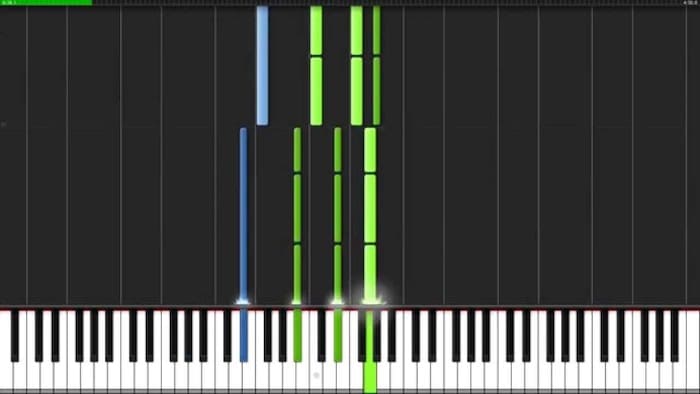
A variety of advanced software features offer instant visual feedback. They include notes that scroll and keyboard overlays that show the correct placement of fingers, and color coded notation indicating accuracy. Note-by-note highlights highlight areas any errors that are made. Other systems employ traffic light systems (green for right, red for incorrect) for immediate feedback on performance. This visual reinforcement helps to accelerate learning as it establishes clear associations between fingers and keyboard geography.
11. Integration into Traditional Pedagogy
Most applications are not designed to replace teachers but to complement the teaching process. Teachers can use these tools to assess progress between classes and provide instructions. Hybrid models of learning make use of technology to facilitate skill building and instant feedback. This gives teachers more time to concentrate on developing artistic skills and providing precise guidance that calls for human knowledge.
12. Notation Literacy and Sight Reading Development
Specialized programs target the development of sight reading through exercises created by algorithms which are adjusted to the level of ability at which students are currently. These systems monitor eye movements (through the interface design) to ensure that pupils are learning the correct reading technique and are looking ahead in a manner that is appropriate. These systems are designed to provide continuous challenge, without displeasure.
13. Technique Development and Exercises
Modules for virtual technique include finger independence exercises, scales and arpeggio teachers, and instruments to increase velocity. Advanced motion capture (where is available) can analyse hand biomechanics to recommend adjustments for technical issues and prevent injury. These systems provide metronome-based practice with gradual tempo increases to improve technical skills.
14. Repertoire Learning Tools
A few of the unique features you can use to master pieces include hand-separated practice, loops for difficult sections and practicing at a variable speed without pitch changes. Annotation capabilities permit you to note interpretations. Performance analysis is a feature of a variety of systems that allow you to keep track of your improvement over time with individual pieces. This allows you to identify difficult sections and targets for practice.
15. Advanced Performance Analytics and Performance Metrics
Dashboards with advanced indicators track performance metrics such as the accuracy of reading and progress in sight-reading. They also monitor practice time distribution. These systems provide detailed updates on the progress made, both in terms of technical and musical abilities. They also often offer comparison analytics with other groups. Data visualization helps students and teachers identify areas of strength and areas that need improvement.
16. Social Features and Integration of Community
Many platforms include social learning functions like community challenges, performance sharing and mentorship programs. These tools help to break the isolation of private practice and encourage musical competitions and friendly competition. Some applications have live music events and educational materials, creating an environment which is much more extensive than practice on your own.
17. Analyzing and recording Playback
Built-in recording capabilities permit students to record and evaluate their performance objectively. Visual representations for dynamics, rhythm accuracy and expression are available through advanced analysis tools. These tools assist in the development of self-assessment. Features for comparison allow students to evaluate their performances with recordings from a reference source.
18. Accessibility Features and Inclusive Design
Many platforms have features that cater to users with different abilities. These include colorblind mode and other methods of input. The inclusive design principles guarantee that technological advances benefit the most people possible.
19. Accessibility across multiple platforms including synchronization
Cloud-based system allows seamless transitions between devices. Practice can continue on tablets, computers and mobile phones. The ability to synchronize progress guarantees the updating of practice accomplishments and lesson completions across all devices.
20. Offline Functions and Practice Options
Quality applications recognize that connectivity to the internet may not always be available. They provide the ability to run offline in order to enable practice sessions. When progress is recorded offline, the application will be synchronized with the online version once connectivity is restored. This feature is particularly useful for users who have unreliable internet or wish to practice in locations that are not connected to the internet. Have a look at the recommended piano learning app for more info including play piano, best piano courses online, em piano, best piano training app, piano website, keyboard piano website, good apps to learn piano, midi keyboard, play piano play, music piano and more.