HAPS Vs Satellites: Which One Wins In Stratospheric Coverage?
1. The very question itself is revealing changes in the way we Think About the concept of coverage
For the majority of the last three decades, the discussion on reaching remote or underserved areas from above has been seen as a debate between ground infrastructure and satellites. With the advent of high-altitude platforms has provided an additional option that doesn't fall neatly into either of the categories That's exactly what makes this comparison fascinating. HAPS don't want to substitute satellites all over the world. They're competing for specific use scenarios where the physics of operating at 20km instead of 500 or 35,000 kilometers results in significantly superior outcomes. Finding out if that advantage present and when it's not is the key to winning.
2. The issue of latency is where HAPS wins Cleanly
The signal travel time is determined by distance. This is where stratospheric platforms have an undisputed advantage in structure over any orbital system. A geostationary satellite sits roughly 35,786 kilometers above the equator. This produces an average round-trip latency of 600 milliseconds. These are acceptable to call calls without noticeable delay. This is a major issue for real time applications. Low Earth orbit constellations have made this much better operating between 550 and 1,200 kilometers with latency in the 20 to 40 millisecond range. A HAPS satellite at 20 kilometers has latency estimates similar the terrestrial internet. If you are in a situation where responsiveness is essential — industrial control systems, emergency communications, financial transactions, direct-to-cell connectivity — the difference isn't just marginal.
3. Satellites Win on Global Coverage and That's All That Matters
A stratospheric spacecraft currently under consideration could provide coverage for the entire globe. A single HAPS vehicle covers a local footprint that is enormous in terrestrial terms, but it is a finite. To achieve global coverage, it is necessary to build the use of a number of platforms across the world, each with its own operation including energy systems, power sources, and station maintenance. Satellite constellations, and especially huge LEO networks, can cover the surface of Earth with overlapping covers in ways the stratospheric system simply cannot duplicate with current vehicle counts. Applications that require truly universal reach like maritime tracking, global messaging, and polar coverage — satellites remain the only viable option at scale.
4. Resolution and Persistence Favour HAPS for Earth Observation
When the purpose is to monitor an entire region in continuous detail -recording methane emissions from an industrial corridor, monitoring a wildfire develop in real-time, or monitoring oil pollution spread from an offshore accident The continuous and close-proximity character of a stratospheric system produces quality data that satellites struggle to keep up with. A satellite operating in low Earth orbit is able to pass through any spot on the ground for minutes at time which is followed by revisit intervals in either days or hours, based on the size of the constellation. A HAPS vehicle, which remains in the same region for weeks provides continuous observation with sensor proximity that provides greater spatial resolution. For stratospheric earth observation purposes that persistence can be better than global reach.
5. Payload Flexibility Is an HAPS Advantage Satellites. easily match
When a satellite is made, its payload fixed. Upgrades to sensors, switching communication hardware or adding new instruments requires the launch of an entirely new spacecraft. A stratospheric satellite returns to the ground during missions, meaning its payload can be modified, reconfigured, or completely replaced as the requirements of missions change or new technology becomes available. Sceye's airship's design is specially adapted to an effective payload capacity, which enables combination of telecommunications antennas greenhouse gas sensors, as well as disaster detection systems all on the same aircraft with the flexibility that will require several satellites to replicate, each with its own budget for their launch, as well an orbital slot.
6. The Cost Structure Is In fundamentally different
Launching a satellite will involve cost of the rocket, ground segment development, insurance, and the acceptance that hardware failures on orbit will be permanent write-offs. Stratospheric platforms operate like aircraft — they are able to be recovered, examined to be repaired, repositioned, and then relaunched. This doesn't mean that they are less expensive than satellites when measured on a basis of coverage-area, but it alters the risk-reward profile and the financials for upgrades. When operators are testing new services in new areas or entering new markets, the possibility of retrieving and alter the platform, rather than accepting orbital hardware as a sunk expense gives them a distinct operational advantage particularly in the initial commercial phases that the HAPS sector is currently experiencing.
7. HAPS may be able to act as 5G Backhaul Even When Satellites Do Not effectively
The telecommunications technology enabled by the high-altitude platform station that operates as a HIBS — effectively one of the cell towers in sky built in order to interface with the existing modern mobile networking standards that satellite traditionally isn't. Beamforming a telecom stratospheric antenna allows dynamic signal allocation across a large area of coverage that supports 5G backhaul to ground infrastructure and direct-todevice connections simultaneously. Satellite systems are gaining more capabilities in this space, but the inherent physics of operating closer to ground gives stratospheric systems an advantage in terms of signal quality, strength and frequency and compatibility with spectrum allocations developed for terrestrial networks.
8. Operational Risk and Weather Differ Significantly Between the Two
Satellites, when they are in stable orbits, are mostly indifferent to the weather on Earth. A HAPS vehicle operating in the stratosphere face a more complicated operational environment which includes stratospheric wind patterns that are influenced by temperature gradients as well as an engineering problem of surviving night in altitude and not losing station. The diurnal rhythm, the regularity of solar energy supply and power draw at night is a design challenge that all solar-powered HAPS must overcome. Technology advancements in lithium sulfur battery energy density as well as the solar cell's efficiency is closing this gap, but it's the real operational problem that satellite operators don't encounter in the same way.
9. It's a fact that They carry out different missions.
Comparing satellites to HAPS in an open-ended competition does not reflect how the non-terrestrial infrastructure will evolve. The more accurate picture is a layered model in which satellites have the world and have applications where coverage universality tops all other aspects while stratospheric platforms perform regional persistence missions — connectivity in geographically challenging environments, continuous monitoring of environmental conditions for disaster management, as well as expanding 5G to areas in which satellite rollouts on land are not economically feasible. The location of Sceye's platform reflects precisely this type of thinking: a technology was designed to accomplish things in a specific region to last for a prolonged period, with sensors and a communications payload which satellites won't be able to replicate at that elevation and close proximity.
10. The Competition Will Ultimately Sharpen Both Technologies
It is possible to argue that the rise of reliable HAPS programs has spurred technology in satellites, and the reverse is true. LEO constellation operators have pushed latencies and coverage in ways that raise the bar HAPS must compete. HAPS developers have demonstrated persistent regional monitoring capabilities, which make satellite operators look at reconfiguration frequency as well as resolution. It is the Sceye and SoftBank partnership aimed at Japan's nation-wide HAPS network, with pre-commercial services expected for 2026 is among the most clear indicators yet that suggests that stratospheric platforms have shifted from a potential competitor to active participant to influence how the interplanetary network and observation market develops. Both technologies will be more effective to withstand the pressure. View the best sceye for more tips including what are high-altitude platform stations haps definition, what does haps stand for, Sceye Inc, softbank haps pre-commercial services 2026 japan, Stratospheric missions, sceye connectivity solutions, softbank sceye haps japan 2026, softbank group satellite communication investments, what are the haps, Sceye Inc and more.
SoftBank'S Pre-Commercial Haps Services: What's Coming In 2026?
1. Pre-Commercial Is A Specific And Significant Milestone
The terms used in this case are important. Pre-commercial services constitute one distinct stage of the creation of any new communication infrastructure. It goes beyond the initial demonstration, beyond proof-of-concept flight campaigns, and then into the realm where real-world users get real-time services under conditions that roughly match what a full-time commercial deployment would look like. It means the platform is station-keeping reliably, the signal is meeting quality thresholds that the actual applications depend on and the ground infrastructure interfaces with the spheric telecom antenna in a way that is safe, and all regulatory security clearances are in the right place to use the service over areas that are heavily populated. The achievement of pre-commercial status is not an event in the marketing calendar. It's an operating one with the knowledge that SoftBank has made a public commitment to the goal with Japan in 2026 is up a standard that the engineers both sides of the partnership need the ability to clear.
2. Japan Is the Right Country to Attempt This First
Picking Japan to host the stratospheric services of pre-commercialization isn't just a. The country has a number of traits that make it ideal as a first deployment environment. The terrain of the country — mountainous terrain, thousands of inhabited islands extensive and complex coastlines -creates real issues of coverage that stratospheric architecture is designed to solve. The regulatory framework is advanced enough to handle the airspace and spectrum questions the stratospheric operation raises. The mobile network infrastructure, which is operated by SoftBank can provide the integration layer that the HAPS platform will need to connect to. And the population is equipped with the device ecosystem and digital literacy needed to utilize stratospheric broadband services without needing an extended period of adoption that can delay significant uptake.
3. Expect the initial coverage to focus on the areas that are not served and Strategically Important Areas
Pre-commercial deployments can't hope to take over the entire country. More likely, it's focused deployments targeting specific areas where the gap between existing coverage and the level of connectivity that stratospheric can offer is the biggest and also where the strategic argument for prioritizing coverage is most compelling. For Japan, this is a reference to islands that are currently dependent on expensive and limited coverage from satellites. These include mountains, rural regions in which the terrestrial economy has failed to provide adequate infrastructure, also coastal zones for which disaster resilience is a national priority given the country's typhoon and seismic risk. These areas provide the clearest demonstration of stratospheric connectivity's benefits and also the most important operational information to improve coverage, capacity, and platform management prior a bigger rollout.
4. The HIBS Standard Is What Makes Device Compatibility Possible
One of the questions anyone is likely to ask about stratospheric broadband is whether it requires specialist receivers or can be used with regular devices. The HIBS framework is High-Altitude IMT Base Station -is the result of a standards-based solution to this question. By adhering to IMT standards that underpin 5G and4G networks globally, such a stratospheric network operating as a HIBS makes itself compatible with the smartphone and device ecosystem that exists within the coverage area. For SoftBank's pre-commercial services, those who subscribe to the coverage areas should be able access to stratospheric connectivity via their devices, without the need for additional hardware — an essential need for any application that aspires to reach the populations that are in remote areas, who require other connectivity options and are the least likely to make the investment in specialist equipment.
5. Beamforming Determines How capacity is distributed
A stratospheric system that covers an area of vast size doesn't automatically give the same amount of power across the entire footprint. How spectrum resources and energy for signal transmission is distributed across the coverage area an issue of beamforming capacity which is the capability of the platform to direct signals toward areas the areas where demand and users are most concentrated rather than broadcasting equally across huge areas that are not yet inhabited. For SoftBank's first commercial phase demonstrating that beamforming from an antenna that is stratospheric can effectively provide commercially feasible capacity to certain areas of a large coverage area is vital as is demonstrating the coverage area. Broad footprint with thin, non-usable capacity does not prove much. Its targeted delivery of truly useful broadband to defined area of service demonstrates the commercial model.
6. 5G Backhaul Apps Could Precede Direct-to-Device Services
In some scenarios, the earliest and simplest to confirm the effectiveness of stratospheric connectivity isn't direct to consumer broadband but 5G backhaul that connects existing ground infrastructures in areas where terrestrial backhaul services are insufficient or even nonexistent. A remote community could have some ground-level network equipment but not have the capacity to connect to the greater network that makes it useful. A stratospheric network that offers that backhaul link expands 5G coverage in communities served by existing ground systems without demanding that end users interact with the stratospheric systems directly. This kind of scenario is easier for engineers to evaluate technically, and provides evidence-based and quantifiable outcomes, and builds operational confidence in platform performance before the more complex direct-to-device service layer is added.
7. The Sceye Platform's Performance 2025 Sets the Stage for 2026.
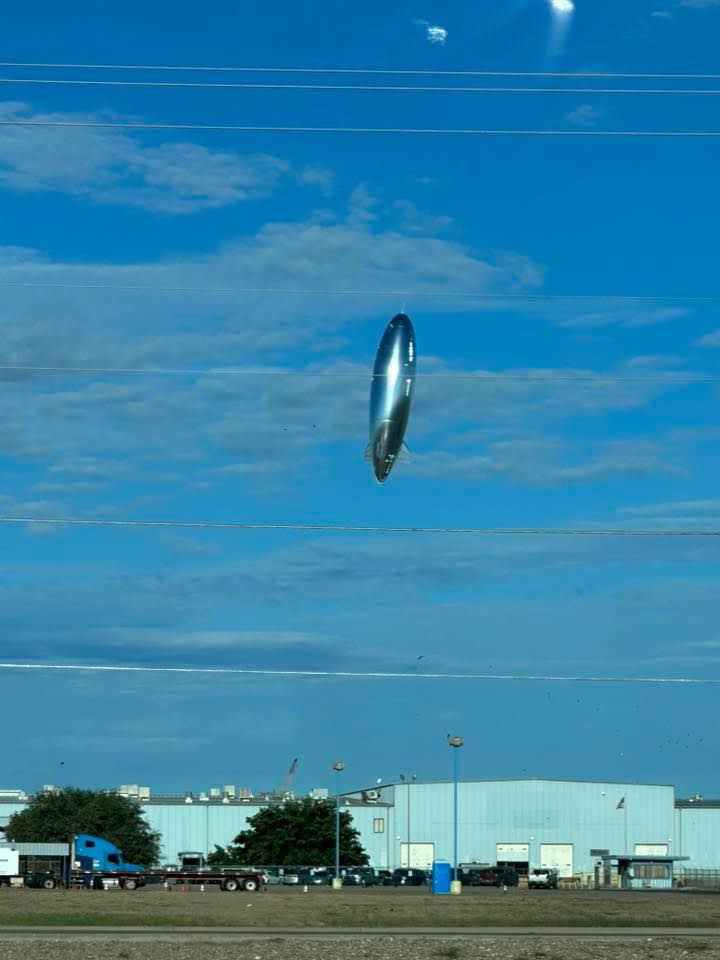
The timing of the first commercial services planned for 2026 depends on the results is achieved by the Sceye HAPS airship achieves operationally in 2025. Validation of station-keeping, payload performance under real weather conditions, energy system behavior across a range of diurnal cycles, as well as the integration testing necessary to ensure that the platform's interface works with SoftBank's network infrastructure all need to reach sufficient maturity before commercial services can be launched. Updates on Sceye HAPS airship status until 2025 are not just peripheral events in the news — they represent the most significant indicators of whether the 2026 deadline is tracking according to plan or whether it is accruing the kind financial debt that pushes commercial timelines. The technological progress that will be made in 2025 is the story that will be developed in advance.
8. Disaster Resilience Will Be A Capability that is Tested, Not Just a Claimed One
Japan's risk of disaster means that any stratospheric pre-commercial service operating within the country will always encounter circumstances — typhoons, seismic events, infrastructure disruption — that test the strength of the platform as well as its utility as an emergency communications infrastructure. This isn't an issue of the deployment context. This is among the most beneficial features. A stratospheric base station that runs the station and continues providing access to connectivity and observation during any significant earthquake or weather event in Japan will demonstrate something that even the most rigorous amount of controlled testing can replicate. The SoftBank Phase prior to commercialization will provide concrete evidence of how the infrastructure works when terrestrial networks are compromised — exactly the evidence of other potential providers in affected countries must know before committing own deployments.
9. The Wider HAPS Investment Landscape Will Respond to What happens in Japan
The HAPS sector attracted meaningful investment from SoftBank and other companies, however the wider telecoms infrastructure sector remains an active watch. Large institutional investors, telecoms companies in other countries and governments who are evaluating the stratospheric infrastructures for their own monitor and coverage needs monitor what is happening in Japan with keen interest. A successful precommercial deployment -platforms on station and services that are operational, as well as indicators of performance that meet thresholdscould accelerate investment decisions across the sector in ways that regular demo flights and partnership announcements can't. However, any delays or performance problems will cause the need for a re-calibration of timelines across the sector. The Japan implementation has significant significance over the entire stratospheric communications sector, not only for it's Sceye SoftBank partnership specifically.
10. 2026 Will Tell Us Whether Stratospheric Connectivity has crossed the Line
There's a line in the development of any technology that transforms infrastructure between a stage in which it is promising and the moment when it becomes a reality. Aviation, electricity, mobile networks and internet infrastructures have all crossed that limit at certain points -not when it was initially tested but when it was first reliable enough to have institutions and citizens considering its existence more than the potential. SoftBank's preliminary commercial HAPS products in Japan are the most credible potential candidate in the near term for when stratospheric connectivity crosses the line. The platforms' ability to hold station through Japanese winters, whether beamforming provides sufficient capacity to island communities, and how the service is able to withstand the type of weather conditions Japan usually experiences, will determine whether 2026 is remembered as the day that the stratospheric internet became a real infrastructure, or the year that the timeline was reset again. Read the best HIBS technology for more info including sceye haps airship status 2025 2026, sceye haps status 2025, what are the haps, solar cell efficiency advancements for haps or stratospheric aircraft, sceye earth observation, stratospheric internet rollout begins offering coverage to remote regions, Lighter-than-air systems, Stratospheric telecom antenna, sceye haps softbank partnership details, Stratospheric infrastructure and more.